The movement designs of microscopic algae can be mapped in higher detail than ever in advance of, giving new insights into ocean health and fitness, many thanks to new technologies developed at the College of Exeter.
The new system makes it possible for experts to examine in unparalleled detail the designs of movement of microscopic algae. The perception could have implications for being familiar with and protecting against hazardous algal blooms, and for the improvement of algal biofuels, which could 1 day present an alternate to fossil fuels.
Microscopic algae enjoy a important position in ocean ecosystems, forming the bases of aquatic foodstuff webs, and sequestering most of the world’s carbon. The overall health of oceans for that reason is dependent on preserving secure algal communities. There is escalating problem that changes in ocean composition these kinds of as acidification may possibly disrupt algae spread and local community make-up. Many species shift and swim around to track down sources of light-weight or vitamins and minerals, in get to maximise photosynthesis.
The new microfluidic technological innovation, now published in eLife, will let researchers to trap and picture solitary microalgae swimming inside of microdroplets, for the initial time. The cutting-edge progress has enabled the workforce to examine how microscopic algae explore their micro-surroundings, and tracked and quantified their behaviours prolonged-expression. Importantly, they characterised how persons differ from one yet another and reply to unexpected alterations in the make-up of their habitat such as the existence of light-weight or selected substances.
Guide creator Dr Kirsty Wan, from the University of Exeter’s Residing Units Institute, mentioned: “This technological innovation implies we can now probe and progress our knowledge of swimming behaviours for any microscopic organism, in depth that has not been doable previously. This will help us comprehend how they manage their swimming styles and prospective for adaptability to long run local weather alter, and other problems.”
In individual, the team has uncovered that the existence of interfaces with sturdy curvature, in mix with the microscopic corkscrewing swimming of the organisms, induce macroscopic chiral movement (normally clockwise or counter-clockwise) observed in the common trajectory of cells.
The technology has a large array of probable works by using, and could depict a new way of classifying and quantifying not only the environmental intelligence of cells, but of complex designs of conduct in any organism, together with animals.
Dr Wan extra: “In the long run, we intention to establish predictive versions for swimming and culturing of microbial and microalgae communities in any relevant habitat top to deeper being familiar with of existing and upcoming maritime ecology. Awareness of thorough behaviour happening at the particular person-cell degree is for that reason an crucial to start with move.”
Story Resource:
Products furnished by College of Exeter. Take note: Written content might be edited for model and length.
Schematic of the experimental set-up. (A) A two-layer microfluidic unit with embedded solitary-mobile traps, and syringes utilised for perfusion of the carrier oil stage and an aqueous suspension containing dwell motile cells. (B) 3D rendering of a one lure in which a cell can be stably trapped and imaged for hours. To demonstrate variability in swimming habits, we examined two species of motile algae, illustrations or photos clearly show respectively: (C) a single Chlamydomonas reinhardtii (CR) cell, and (D) a one Pyramimonas octopus (PO) cell, in each circumstance trapped within just a 120 μm-diameter circular very well. (Cilia positions are highlighted by manual tracings.). Credit: eLife (2022). DOI: 10.7554/eLife.76519
The motion designs of microscopic algae can be mapped in larger detail than ever just before, giving new insights into ocean health, many thanks to new engineering designed at the College of Exeter.
The new system makes it possible for researchers to research in unprecedented depth the designs of motion of microscopic algae. The perception could have implications for being familiar with and blocking dangerous algal blooms, and for the development of algal biofuels, which could just one working day provide an substitute to fossil fuels.
Microscopic algae engage in a critical function in ocean ecosystems, forming the bases of aquatic foodstuff webs, and sequestering most of the world’s carbon. The health and fitness of oceans for that reason depends on keeping secure algal communities. There is raising concern that changes in ocean composition this sort of as acidification may possibly disrupt algae spread and community make-up. Lots of species move and swim all around to locate sources of light-weight or vitamins and minerals, in buy to maximize photosynthesis.
The new microfluidic know-how, the aspects of which are now printed in eLife, will allow researchers to lure and graphic solitary microalgae swimming within microdroplets for the initially time. The slicing-edge enhancement has enabled the team to research how microscopic algae discover their micro-natural environment, and tracked and quantified their behaviors long-phrase. Importantly, they characterised how people vary from one particular another and respond to sudden changes in the make-up of their habitat these as the existence of light-weight or specified chemical substances.
Lead writer Dr. Kirsty Wan, from the College of Exeter’s Residing Units Institute, explained, “This technology usually means we can now probe and progress our being familiar with of swimming behaviors for any microscopic organism, in depth that has not been achievable formerly. This will support us comprehend how they handle their swimming patterns and possible for adaptability to foreseeable future local climate modify, and other problems.”
In specific, the group has identified that the existence of interfaces with sturdy curvature, in blend with the microscopic corkscrewing swimming of the organisms, induce macroscopic chiral movement (generally clockwise or counter-clockwise) viewed in the average trajectory of cells.
The know-how has a extensive range of potential utilizes, and could signify a new way of classifying and quantifying not only the environmental intelligence of cells, but of elaborate patterns of behavior in any organism, which includes animals.
Dr. Wan additional, “Ultimately, we aim to build predictive styles for swimming and culturing of microbial and microalgae communities in any appropriate habitat leading to deeper understanding of present and upcoming marine ecology. Awareness of specific conduct happening at the specific-mobile stage is hence an critical initial stage.”
More facts:
Samuel A Bentley et al, Phenotyping solitary-mobile motility in microfluidic confinement, eLife (2022). DOI: 10.7554/eLife.76519
Journal information:
eLife
Presented by
College of Exeter
Citation:
New know-how maps motion of microscopic algae in unprecedented element (2022, November 23)
retrieved 23 November 2022
from https://phys.org/information/2022-11-engineering-motion-microscopic-algae-unparalleled.html
This doc is issue to copyright. Aside from any fair working for the intent of private examine or research, no
part might be reproduced with no the composed authorization. The content is supplied for facts needs only.
MONDAY, Feb. 7, 2022 (HealthDay News) — A bike crash still left Michel Roccati with complete reduced-overall body paralysis from a devastating spinal cord injury.
But now, the Italian native is walking again, courtesy of groundbreaking Swiss investigate that restores motor perform inside a person working day by suggests of meticulously specific electrical stimulation.
“At the beginning, I was unable to move the muscle tissues of the legs, and I come to feel nothing,” Roccati recalled recently.
Now he can stand, stroll and do stairs. In fact, “every little thing I have in head to educate I can do with the stimulation,” Roccati reported at a press briefing hosted by Character Medicine, which not too long ago published the results.
Roccati is a person of 3 people enrolled in the Swiss exertion, all men concerning 29 and 41 many years outdated. Each individual experienced experienced a full spinal twine harm at minimum a yr prior to the study’s start.
“This signifies that they could not transfer the legs, and they did not have any sensation over the legs,” stated research co-author Dr. Jocelyne Bloch, a neurosurgeon and main of the useful neurosurgery unit at Lausanne University Hospital in Switzerland.
Talking at the briefing, Bloch mentioned that in 2020 the 3 men underwent medical procedures at NeuroRestore in Lausanne to implant a pacemaker in the abdomen and electrodes right on to the spinal wire.
Those people electrodes are by themselves an essential innovation, spelled out review colleague and neuroscientist Grégoire Courtine.
Manufactured to be everlasting, they are “exactly positioned to goal all the areas of the spinal wire that are applicable to activate trunk and leg muscle groups,” reported Courtine, who is with the Swiss Federal Institute of Technology in Lausanne.
The electrodes were being then paired with new program that facilitated a hugely customized mapping of each individual patient’s spinal cord, Courtine explained in the briefing.
The computer software also supplies a basic tablet-primarily based interface that lets clients and actual physical therapists to quickly set up semi-automated stimulation programs that permit a variety of actions.
Clients can run these systems by themselves, through a tablet and small distant controls that can converse wirelessly to the patient’s pacemaker.
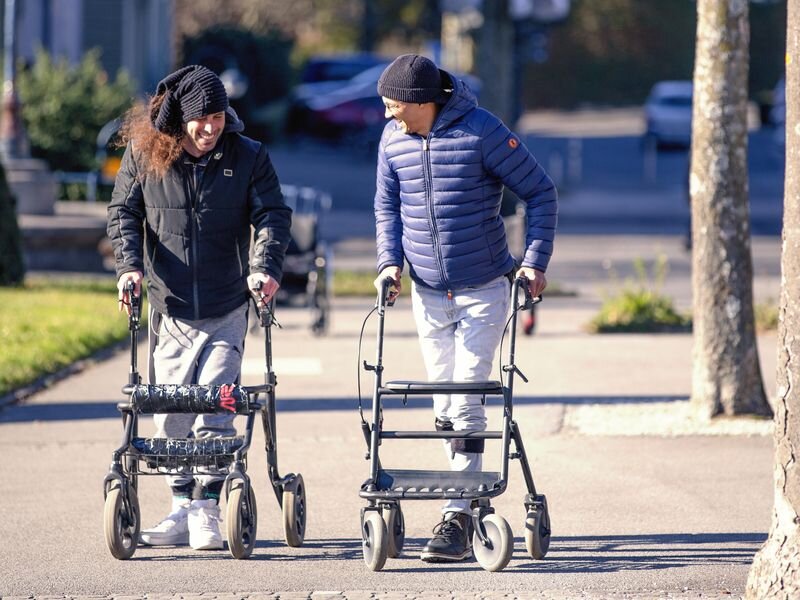
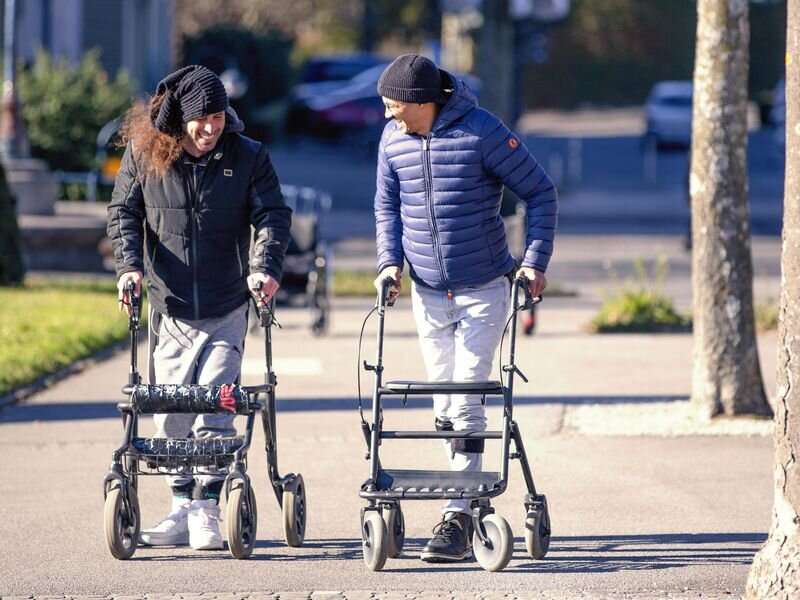
For Roccati, all this meant that adhering to a 10-working day put up-surgical procedures recovery period, rehab commenced — and “I was in a position to walk right after a single day,” he reported. The remote controls are hooked up to his walker.
“Thanks to this engineering, all 3 individuals, straight away following surgery, have been in a position to stand up and walk,” said Bloch all through the briefing. Pedaling, swimming, and torso movement were being also enabled. None described any pain or facet consequences triggered by the stimulation.
Nevertheless, Bloch famous that motor control “was not ideal at the incredibly beginning.” And Courtine emphasized that regaining movement post-surgery is a approach, “not a wonder,” with patients to begin with needing a ton of actual physical assist. Also, “the recovery of sensation is quite different from one particular affected person to the other,” he extra.
“But what it does is help an speedy skill to teach,” Courtine pointed out. And due to the fact the engineering is modest and transportable, that schooling can consider position out in the real planet.
Every single working day, with the stimulation turned on, “Michel is ready to stand for two hours, and he walks pretty much 1 kilometer (.6 of a mile) straight, devoid of halting,” in addition to climbing up and down stairs, said Courtine. “When the stimulation is turned off, he experienced some recovery, but to a pretty constrained extent.”
Bloch mentioned the engineering would virtually unquestionably perform similarly nicely among the woman paralysis people.
And although potential research could increase what’s attainable, Bloch acknowledged 1 vital limitation: “We want at minimum 6 centimeters of wholesome spinal wire less than the lesion. Which is in which we implant our electrodes.”
Claudia Angeli, director of the College of Louisville’s Spinal Cord Harm Exploration Centre in Kentucky, agreed the Swiss team’s work is “encouraging,” but mentioned other approaches also clearly show advantage.
“This group is employing a quite specific stimulation” signaling strategy, while different endeavours attempt to help motor management through immediate stimulation of mind signals, she reported.
These choice techniques “have shown very similar final results,” Angeli observed. “There has not been a direct comparison of the two solutions, but each are showing promise for restoration next spinal wire injuries.”
In the meantime, the Swiss workforce has a demo in the operates in the United States. The scientists pointed out that the U.S. Food and Drug Administration has authorised a “breakthrough devices” designation to expedite the course of action whereby the technology could turn out to be commercially readily available. This designation would also make certain protection through the Medicare Coverage of Revolutionary Engineering software if larger medical trials are profitable, the researchers reported.
As for Roccati, following 9 months of Lausanne-dependent rehab, he now life independently in Italy. “I continued rehab at household, operating by itself, with all the units,” he claimed. “And I see enhancements every day.”
Resources: Claudia Angeli, PhD, assistant professor, School of Engineering, University of Louisville, and director, Kentucky Spinal Wire Injuries Research Heart push briefing, Feb. 2, 2022, and Nature Medicine, Feb. 2, 2022
A bike crash left Michel Roccati with comprehensive reduced-system paralysis from a devastating spinal twine harm.
That was in 2017.
But now, the Italian native is going for walks once again, courtesy of groundbreaking Swiss research that restores motor perform within a single day by suggests of cautiously qualified electrical stimulation.
“At the commencing, I was not able to move the muscle mass of the legs, and I come to feel almost nothing,” Roccati recalled not too long ago.
Now he can stand, wander and do stairs. In simple fact, “all the things I have in mind to coach I can do with the stimulation,” Roccati mentioned at a push briefing hosted by Nature Drugs, which lately released the findings.
Roccati is one particular of 3 people enrolled in the Swiss work, all men in between 29 and 41 decades old. Each and every experienced skilled a full spinal cord harm at the very least a yr prior to the study’s start.
“This usually means that they could not go the legs, and they did not have any sensation above the legs,” mentioned research co-author Dr. Jocelyne Bloch, a neurosurgeon and chief of the purposeful neurosurgery unit at Lausanne College Clinic in Switzerland.
Speaking at the briefing, Bloch noted that in 2020 the 3 adult men underwent surgical procedures at NeuroRestore in Lausanne to implant a pacemaker in the stomach and electrodes instantly onto the spinal wire.
All those electrodes are by themselves an vital innovation, described research colleague and neuroscientist Grégoire Courtine.
Produced to be permanent, they are “precisely positioned to focus on all the regions of the spinal wire that are relevant to activate trunk and leg muscle tissue,” claimed Courtine, who is with the Swiss Federal Institute of Engineering in Lausanne.
The electrodes ended up then paired with new software program that facilitated a highly customized mapping of just about every patient’s spinal wire, Courtine claimed in the briefing.
The application also supplies a simple pill-based mostly interface that enables patients and bodily therapists to conveniently set up semi-automatic stimulation programs that help a assortment of actions.
Sufferers can run these applications them selves, through a pill and little distant controls that can talk wirelessly to the patient’s pacemaker.
For Roccati, all this intended that following a 10-day submit-operation restoration period, rehab began—and “I was capable to walk soon after a single day,” he said. The distant controls are connected to his walker.
“Many thanks to this know-how, all three sufferers, instantly immediately after surgical procedure, ended up able to stand up and wander,” explained Bloch all through the briefing. Pedaling, swimming, and torso motion have been also enabled. None claimed any agony or aspect outcomes brought on by the stimulation.
Still, Bloch pointed out that motor command “was not fantastic at the very starting.” And Courtine emphasized that regaining motion put up-surgery is a system, “not a miracle.” with individuals originally needing a lot of bodily assist. Also, “the restoration of sensation is extremely distinct from one particular affected person to the other,” he additional.
“But what it does, is help an rapid potential to train,” Courtine famous. And because the technology is little and transportable, that teaching can consider position out in the serious world.
Just about every day, with the stimulation turned on, “Michel is in a position to stand for two several hours, and he walks nearly 1 kilometer (.6 of a mile) straight, without having halting,” in addition to climbing up and down stairs, explained Courtine. “When the stimulation is turned off, he had some recovery, but to a really confined extent.”
Bloch claimed the know-how would just about definitely get the job done similarly well amid woman paralysis clients.
And whilst foreseeable future investigation may perhaps expand what is probable, Bloch acknowledged a single critical limitation: “We need at minimum 6 centimeters of healthy spinal twine less than the lesion. That’s in which we implant our electrodes.”
Claudia Angeli, director of the University of Louisville’s Spinal Cord Harm Study Center in Kentucky, agreed the Swiss team’s function is “encouraging,” but said other strategies also exhibit benefit.
“This group is using a pretty unique stimulation” signaling strategy, while option attempts endeavor to allow motor manage through direct stimulation of brain indicators, she claimed.
This kind of option strategies “have shown identical results,” Angeli noted. “There has not been a immediate comparison of the two methods, but both of those are demonstrating promise for restoration next spinal wire personal injury.”
Meanwhile, the Swiss staff has a demo in the performs in the United States. The scientists famous that the U.S. Foodstuff and Drug Administration has authorised a “breakthrough units” designation to expedite the process whereby the technological know-how could turn out to be commercially available. This designation would also ensure protection by means of the Medicare Coverage of Revolutionary Technological know-how system if greater clinical trials are effective, the scientists mentioned.
As for Roccati, following 9 months of Lausanne-primarily based rehab, he now lives independently in Italy. “I ongoing rehab at home, doing work by yourself, with all the devices,” he reported. “And I see enhancements just about every day.”
Breakthrough neurotechnology for managing paralysis
Extra data:
Andreas Rowald et al, Activity-dependent spinal wire neuromodulation fast restores trunk and leg motor functions right after finish paralysis, Nature Medication (2022). DOI: 10.1038/s41591-021-01663-5
Quotation:
New technology restores movement soon after spinal twine paralysis (2022, February 7)
retrieved 8 February 2022
from https://medicalxpress.com/news/2022-02-technological know-how-movement-spinal-cord-paralysis.html
This doc is subject matter to copyright. Apart from any good working for the goal of non-public analyze or analysis, no
section might be reproduced with no the published authorization. The written content is presented for information needs only.