A Practical Technology Plan for Managing a Waterfront Vacation Rental

A waterfront vacation rental has to work smoothly before guests ever reach the dock or step onto the balcony. People expect a simple booking process, reliable Wi-Fi, clear arrival instructions, and quick answers when something goes wrong. For owners and managers, a thoughtful mix of technology can make those expectations easier to meet without turning hospitality into a collection of apps and automated messages.

The best approach is to start with the guest journey: how people discover the property, book it, arrive, settle in, and share feedback afterward. Choose tools that solve a real problem at each stage, and make sure they work together. A small, dependable setup is often more useful than a long list of disconnected services.

Make the booking and arrival experience straightforward

Your website or booking platform is often the first impression a guest gets. Keep property details current, including sleeping arrangements, parking, accessibility, waterfront access, and any rules for using kayaks, docks, or outdoor spaces. Good photos help people understand the layout, while a clear description prevents avoidable surprises. A mobile-friendly booking flow matters too, since many travelers research and reserve stays from their phones.

Once a booking is confirmed, automate the information guests repeatedly need: check-in time, directions, parking instructions, door access, Wi-Fi details, and a contact method for urgent questions. A scheduled message can provide these details at the right time, but it should not replace a personal response when a guest has a specific concern. Keep a printed backup in the rental in case a phone battery dies or the internet is unavailable.

Choose smart devices with reliability in mind

Smart locks can make arrivals more flexible and remove the need to coordinate key handoffs. Use unique access codes where possible, set them to expire after checkout, and test the lock regularly. Keep a secure backup entry plan for power, connectivity, or device problems. Guests should know what to do if the keypad does not respond, without having to search through a long message thread.

Reliable Wi-Fi is another basic part of the stay, whether guests are streaming, working remotely, or checking local weather. Place the router where it can serve the rooms guests use most, and test coverage near patios or other advertised work and leisure areas. If the property has a dock, pool, or other outdoor feature, explain where connectivity is strongest rather than promising coverage everywhere.

Smart thermostats and leak sensors can help owners spot problems and manage utilities, but configure them with guest comfort and privacy in mind. Make temperature controls easy to understand, disclose relevant monitoring devices, and avoid placing cameras in private areas. Technology should support the property and its visitors, not make guests feel watched.

Use a small, connected operations toolkit

Property management software can bring reservations, cleaning schedules, and guest messages into one place. Before choosing a system, list the tasks that currently take the most time. A calendar that prevents double bookings may be essential; a complicated dashboard full of features you will never use may not be. Check whether the tools you already rely on can share reservation and availability information, and decide who on your team is responsible for keeping records current.

Digital checklists can help cleaners and maintenance staff confirm that key tasks are completed between stays. For a waterfront rental, the list might include checking outdoor furniture, removing debris, testing lights along walkways, and confirming that any guest equipment is in good condition. Include a way to report issues with a photo and a short note, so a minor repair does not become a guest complaint.

Build visibility with useful content

Technology also shapes how travelers find a rental. A helpful website can answer practical questions about the neighborhood, seasonal conditions, transportation, and what to bring for a stay by the water. Publish information that reflects the actual property and local experience rather than relying on generic promotional copy. Keep dates, amenities, and policies accurate across the channels where you list the rental.

For technology companies serving hospitality businesses—such as booking platforms, connectivity providers, or property management software makers—publishing useful articles can introduce their expertise to new audiences. A resource such as technology guest-posting sites can help identify publishing opportunities across more than 5,000 technology websites and blogs. The strongest contributions offer practical guidance that suits the publication’s readers, rather than simply presenting a product pitch.

Smaller operators may also need occasional help with a website update, a booking workflow, photography, or written guest materials. A freelance marketplace such as Osdire gives buyers and freelancers a place to connect across more than 900 categories, including programming and tech, design, writing, photography, and marketing. Its flat pricing and payment process—funds are held while an order is underway and released after the buyer approves the delivered work—can make project expectations easier to manage. As with any hire, define the scope, deadline, and ownership of finished files before work begins.

Review what is working

After a few bookings, look for patterns. Are guests asking the same arrival question? Are there recurring Wi-Fi complaints or maintenance issues? Use feedback, message history, and booking data to improve the information or tools behind the problem. Avoid collecting personal information you do not need, and protect account access with strong passwords and two-factor authentication where available.

A useful rental technology plan is not about automating every interaction. It is about removing friction while preserving the welcoming, local character that makes a stay memorable. Start with booking, arrival, connectivity, and upkeep; add tools only when they make one of those experiences more dependable. That measured approach helps guests enjoy their time on the water and gives owners a clearer view of what needs attention next.

The Precision Science of Physician Onboarding Software: Balancing Efficiency and Engagement in Healthcare Systems

Why Effective Physician Onboarding Matters

Starting a new physician in a healthcare system is more than a human resources task. It directly impacts patient care and safety. When onboarding is slow, fragmented, or inconsistent, physicians face unnecessary stress navigating administrative hurdles, unfamiliar protocols, and technology systems. This affects their engagement and satisfaction and can indirectly compromise patient outcomes. Studies show that new physicians often experience anxiety during their first months, worrying about meeting productivity expectations while learning organizational procedures. For patients, delayed integration of specialists can result in longer wait times, reduced access to care, and variability in treatment quality. In an era where patient satisfaction scores, care quality metrics, and clinical outcomes are closely monitored, every inefficiency in physician onboarding has ripple effects. Ensuring a smooth, structured onboarding process is essential for both physician wellbeing and patient confidence in care delivery.

Physician onboarding software has emerged as a critical solution to these challenges, offering healthcare systems the ability to streamline administrative tasks, coordinate credentialing, and accelerate integration into clinical workflows. Beyond efficiency, these platforms enhance engagement by providing consistent communication, mentorship programs, and structured orientation schedules. For example, Dayton Children’s Hospital partnered with Tiller-Hewitt to implement onboardPLUS, reducing time to full productivity from 14 months to just five while simultaneously lowering physician turnover from 11.6 percent to 2.7 percent. Such results demonstrate that technology-backed onboarding programs do more than save time. They directly contribute to financial performance, patient care continuity, and staff satisfaction. This article explores the research, best practices, and broader implications of physician onboarding software, illustrating how healthcare systems can balance operational efficiency with physician engagement and retention.

Understanding the Impact of Effective Physician Onboarding

Physician onboarding is a critical factor in determining both the success of new hires and the overall efficiency of healthcare organizations. Studies indicate that physicians who experience structured and supportive onboarding are significantly more likely to achieve productivity milestones faster and remain with the organization longer. According to the Society for Human Resource Management, organizations with strong onboarding programs see up to 69 percent higher employee retention. In healthcare, retention is not just a human resources concern—it directly affects patient care continuity, staffing costs, and organizational stability. Dr. Sarah Klein, a healthcare management expert, explains, “Physician engagement begins the moment they are recruited. A structured onboarding program reduces uncertainty, builds confidence, and fosters loyalty, which translates into better care for patients and less turnover for the hospital.”

Even small improvements in the onboarding process can have a large impact. Streamlining paperwork, clarifying policies, and providing early access to systems helps physicians feel prepared and supported. This initial investment sets the tone for their entire tenure, increasing engagement and reducing early attrition that can disrupt patient care and hospital operations.

In addition to retention, effective onboarding has measurable effects on productivity and operational efficiency. Research published in the Journal of Healthcare Management shows that physicians with comprehensive onboarding achieve full productivity an average of six months earlier than those who undergo traditional, informal orientation. Inefficient onboarding can cost hospitals up to $500,000 per physician in delayed revenue, considering lost patient visits, administrative errors, and slower integration into care teams. Technology solutions, such as onboarding software, help streamline credentialing, policy education, and system access, eliminating bottlenecks and reducing the learning curve. These platforms also provide analytics that allow administrators to identify delays or gaps in the process, ensuring continuous improvement.

The benefits extend beyond operational metrics. Physicians who undergo structured onboarding report higher job satisfaction and reduced stress levels, which correlates with improved patient interactions and outcomes. A survey conducted by the American Medical Association found that 78 percent of physicians valued mentorship and structured onboarding as key factors in their decision to remain with a healthcare system. This highlights the dual advantage of onboarding: supporting physician wellbeing while protecting the organization’s financial and clinical performance. Integrating evidence-based practices and technology-driven solutions creates a system where physicians can transition confidently into their roles, delivering care efficiently from the outset.

Case Study: Dayton Children’s Hospital

Dayton Children’s Hospital provides a compelling example of how structured onboarding programs, supported by physician onboarding software, can dramatically improve physician integration, engagement, and retention. Facing challenges with pediatric subspecialist onboarding, the hospital partnered with Tiller-Hewitt, a healthcare consulting firm that specializes in physician engagement and onboarding solutions, to implement their comprehensive physician onboarding software and process improvement program. Before implementing the system, credentialing processes were lengthy and inconsistent, and new physicians often took more than a year to reach full productivity. High turnover and extended time to independence posed risks to patient access and operational efficiency.

In this case study, it showed that the implementation of the physician onboarding software led to measurable improvements. Credentialing time dropped from 322 days to 84 days, while time to full productivity decreased from 14 months to just five. Physician turnover also fell from 11.6 percent to 2.7 percent. These changes not only enhanced operational performance but also increased physician satisfaction and engagement, creating a more supportive work environment. Financially, accelerating physicians to full productivity nine months earlier contributed to an estimated $600,000 in additional revenue per physician in the first year.

This case highlights how physician onboarding software can serve as a strategic tool rather than just an administrative convenience. While Dayton Children’s outcomes are exceptional, the example underscores broader lessons for healthcare systems. Structured onboarding, mentorship programs, and process standardization, enabled by technology, can reduce inefficiencies, improve retention, and positively impact both patient care and financial performance. The results support the growing body of research demonstrating that effective onboarding, when paired with advanced physician onboarding software, is directly linked to organizational success.

These results demonstrate that investing in physician onboarding software not only streamlines administrative tasks but also strengthens engagement, improves retention, and supports a culture where physicians can deliver high-quality care confidently.

The Role of Technology in Streamlining Onboarding

Technology has become an essential component of effective physician onboarding, helping healthcare organizations reduce administrative burdens, accelerate integration, and improve retention. Physician onboarding software allows hospitals to automate credentialing, track licensure and certifications, and standardize orientation processes, ensuring that new physicians can begin delivering care more quickly. Research shows that automation in onboarding can reduce time-to-productivity by up to six months and minimize errors associated with manual processes, directly improving patient access and operational efficiency. Dr. Michael Reynolds, a healthcare management consultant, notes, “Leveraging technology in onboarding is no longer optional. Systems that automate routine tasks and provide clear, structured workflows allow physicians to focus on patient care from day one.”

Even small improvements in onboarding workflows can have a significant impact. Streamlining tasks such as policy review, credential verification, and access to systems reduces stress for new physicians and allows them to focus on learning clinical workflows more efficiently.

Integration with electronic health records is a key feature of modern physician onboarding software. Connecting onboarding platforms with EHRs ensures that new hires have immediate access to patient data, order sets, and workflow protocols. Studies published in the Journal of Healthcare Information Management indicate that hospitals with integrated onboarding and EHR systems experience 20 to 30 percent fewer delays in physician credentialing and task completion. AI-driven solutions further enhance the process by identifying bottlenecks, providing real-time reminders, and facilitating compliance tracking, which can reduce administrative errors and streamline reporting requirements.

Beyond efficiency, technology also supports physician engagement. Many onboarding platforms include mentorship programs, progress dashboards, and communication tools, allowing new physicians to receive guidance, feedback, and support throughout their first year. According to a survey by the American Medical Association, 78 percent of physicians reported that technology-enabled onboarding programs improved their confidence and job satisfaction. By combining automation, integration, and engagement features, physician onboarding software provides a comprehensive solution that strengthens both organizational performance and physician wellbeing.

Physician onboarding software ultimately benefits both staff and patients. By reducing administrative delays, supporting physician confidence, and promoting engagement, these platforms improve care quality, increase retention, and enable hospitals to maintain operational efficiency while fostering a positive work environment.

Best Practices for Physician Onboarding

Effective physician onboarding goes beyond completing paperwork and orientation sessions. Structured programs that focus on both operational and cultural integration improve physician satisfaction, retention, and productivity. Research indicates that hospitals with formal onboarding programs see up to 69 percent higher retention and faster time-to-productivity. Key elements of successful programs include clear communication, mentorship, and consistent access to tools and resources. These elements help physicians feel supported, reducing stress and improving their ability to deliver high-quality care from the start.

Healthcare organizations can implement the following best practices to optimize onboarding:

  • Establish a structured orientation schedule that spans several weeks rather than a single day

  • Assign mentors or experienced physicians to provide guidance and support

  • Automate credentialing, policy reviews, and system access through physician onboarding software

  • Incorporate progress dashboards and feedback loops to track development and address challenges

  • Provide clear communication channels between new hires and administrative staff

Beyond operational processes, organizations should focus on engagement and culture. Encouraging early participation in team meetings, quality improvement initiatives, and hospital committees helps physicians build relationships and understand organizational priorities. Programs that combine technology with personalized support foster confidence, enhance job satisfaction, and reduce early attrition, ultimately creating a more resilient and effective healthcare workforce.

Achieving Optimal Outcomes with Physician Onboarding Software

Effective physician onboarding is critical for both organizational success and high-quality patient care. By leveraging physician onboarding software, healthcare systems can streamline administrative tasks, accelerate integration, and improve retention. Hospitals that adopt structured, technology-driven onboarding programs see measurable benefits, including faster time-to-productivity, reduced turnover, and stronger physician engagement. These improvements not only support operational efficiency but also enhance patient experiences and outcomes.

The case of Dayton Children’s Hospital demonstrates how onboarding software can transform the integration of high-demand specialists, reducing credentialing times and achieving rapid productivity while creating a supportive environment. Beyond individual hospitals, advanced platforms allow organizations to scale programs across multiple locations, tailor onboarding for specific specialties, track long-term performance metrics, and provide mentorship and analytics to support engagement. Investing in physician onboarding software is more than a workflow enhancement; it is a strategic approach to building a resilient, confident, and engaged healthcare workforce, ensuring that new physicians are prepared to deliver exceptional care and creating a foundation for sustained organizational success and improved patient outcomes.


deutsche telekom design’s AI installation questions future of digital at MWC barcelona 2023

deutsche telekom structure builds resourceful communities


Deutsche Telekom concerns the human-centricity of know-how throughout the Cell Earth Congress (MWC) Barcelona 2023. Layout offers technologies a coronary heart beat, and it is the telecommunications providers’ style workforce that shapes its expert services to strengthen users’ each day lives. Visitors at the fairground are invited to examine seamless connectivity by way of user-situation situations. Beyond the tech-pushed occasion and into the city as properly, a panel talk promotes dialogue about layout with the nearby neighborhood of creatives. In this article, a imagined-provoking conceptual set up also questions the upcoming of know-how by AI-generated photos exhibited on relocating robotic arms.


‘At Deutsche Telekom design team, we genuinely believe that that layout has a huge impact in the potential of customer activities and innovation. For this cause, we devote an celebration to designers in Barcelona, the day ahead of the Cellular Environment Congress. We set up this dialogue by inviting community creatives in the entire world of design and know-how to participate in our panel and audience,’ commences Monica Dalla Riva, Senior Vice President of Layout & CX at Deutsche Telekom, at the design and style talk in Barcelona.

deutsche telekom design's AI installation questions future of digital at MWC barcelona 2023
deutsche telekom inquiries the long term of electronic at MWC barcelona 2023


hyper-personalized t practical experience at MWC 2023


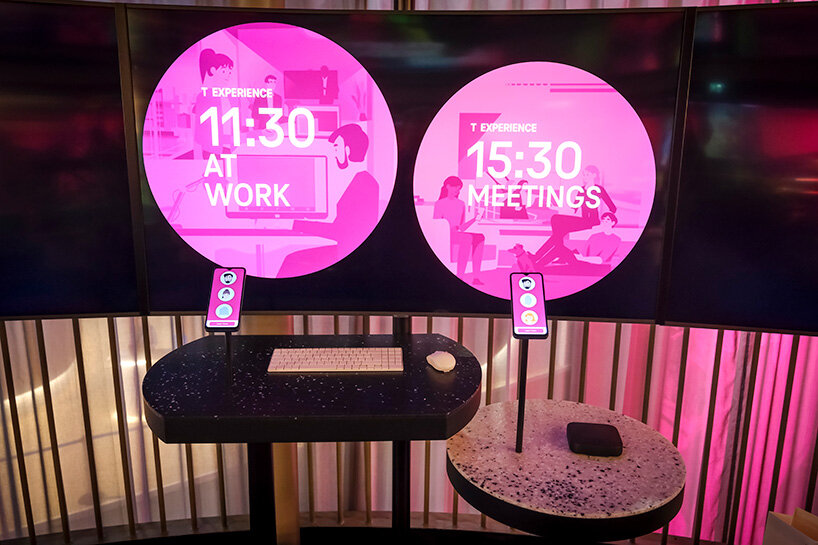
As the Deutsche Telekom Design & Client Encounter performs to ensure a seamless connectivity to enrich people’s life, the model invites customers’ to examine touchpoints of their services at the MWC fairground. The T Encounter reveals how we can usually be ideally connected. Through the eyes of the fictional Berger household, guests journey through scenarios in the family’s life – whether at household or on the transfer – as they receive seamless, hyper-customized activities.

deutsche telekom design's AI installation questions future of digital at MWC barcelona 2023
At MWC, the T Encounter exhibits how consumers can usually be ideally linked with Deutsche Telekom


The loved ones wish to stay linked, be entertained, and fulfil each day endeavor as easily as probable. To supply, the structure team is committed to developing simplicity throughout the services of Deutsche Telekom. No lengthier is one particular residence member accountable for all products and solutions as a substitute all people in the loved ones has an specific practical experience where services are customized to your choices. The residence acts sustainable by itself, mechanically shutting down systems when not necessary. This technological magic is built doable applying synthetic intelligence, shaped by the style and design workforce.


‘Designers have to believe about various generations, this kind of as gen alpha born from 2010. Every single particular person has a absolutely distinct set of values, specially in relation to electronic. This is a stable, vital component of our investigation,’ carries on Monica. ‘Our style staff requires to recognize how people use technologies in purchase to profit their lives with our providers. Our products need to have to make sense, relatively than just introducing much more and polluting the world.’

deutsche telekom design's AI installation questions future of digital at MWC barcelona 2023
By way of the eyes of the fictional Berger family members, readers journey as a result of personalised eventualities of their working day


designers converse tech in barcelona


Deutsche Telekom engages creatives in the metropolis as very well as the fairground Barcelona is a spot that the design group is aware of properly. Operative for extra than 10 decades, Deutsche Telekom Layout & Shopper Knowledge is made up of a 140-sturdy workforce of designers distribute throughout several nations and towns, from investigate and insights to UX/UI, accessibility, components and service designers. This consists of the sensible hub of Barcelona – see open positions, in this article – that is distinctively forward-contemplating. Their numerous group operate alongside one another to experiment with new ideas that assist daily everyday living in response to customer requires.


‘We not only generate merchandise design, hardware and software program, but also electronic solutions like UX / UI, research, strategic design and provider structure. We find it is an important exercise to visualize the long run. We require to think in different ways today for the reason that the alternatives are endless,’ says the Senior Vice President.

deutsche telekom design's AI installation questions future of digital at MWC barcelona 2023
Monica Dalla Riva (far correct in white) hosts a panel discussion all-around human-centered digital design and style


The resourceful local community of Barcelona discuss how to enhance the working experience in the digital entire world. Humanity is created in as conventional for Deutsche Telekom, but the human-centricity of technologies is questioned all through MWC 2023. Monica Dalla Riva hosts a panel discussion all over human-centered electronic design and style. She is joined by a team of cross-market style and design leaders, who examine the part of designers in tech businesses and the future of technology, among lots of much more subject areas.


‘Design and style styles the influence digital technological know-how has on our life, and the job of structure is altering for the reason that of this. By generating with systems, encounters require to be a lot more and additional human-centric as, otherwise, it is meaningless,’ provides Monica.

deutsche telekom design's AI installation questions future of digital at MWC barcelona 2023
The panel go over the function of designers in tech organizations and the potential of technology


AI imagery prompts creatives to visualize long term


Made in collaboration with Espadaysantacruz Style Studio, the Notion Style and design Installation appears into the long term of digital experience. AI picture generation technological know-how is utilized to job concerns with person-scenarios scenarios to the audience. The shows transfer around the space on a collection of robotic arms.

deutsche telekom design's AI installation questions future of digital at MWC barcelona 2023
Established with Espadaysantacruz, the Idea Structure Set up seems into the upcoming of digital practical experience


The set up voices out concerns on the long term of digital ordeals and other considered-provoking subject areas, without having anticipating solutions and answers in return. As a substitute, the strategy manifests hope for individuals in this era of data. It provokes an comprehension of the job of connectivity and engineering shifting forward, how it can be utilized to change the way we stay with 1 yet another, and how it can make the world a greater place.


‘The installation was created by our design team. Applying AI technologies, we questioned ourselves a great deal of queries. It is not straightforward to imagine the upcoming. Tlisted here are new systems that are currently impacting our lives and can be employed as applications for designers. This challenge portrays aesthetics and prompts inquiries of what this long run could appear like,’ concludes Monica Dalla Riva.

deutsche telekom design's AI installation questions future of digital at MWC barcelona 2023
Prompting issues, the concept manifests hope for individuals within just this era of info

A new era of technology coverage on Vox

For something that’s defined by change, the world of technology feels extra disruptive lately. Artificial intelligence is making headlines on a regular basis. Electric vehicles are taking over the roads. Microchips are made in America again. For the techno-optimists out there, we’re finally living in a version of the science fiction-inspired future we were promised.

But our present is more complicated than that. The tech industry is facing a series of crossroads. The businesses that once seemed like unstoppable profit machines are starting to sputter, slowing the meteoric growth of tech giants as leaders in Washington target them for being too big. A changing global economy is bringing high-tech manufacturing jobs back to the United States, as office workers find themselves torn between returning to the office and striking out on their own. Our roads aren’t actually ready for all those electric vehicles, and the AI technology that’s taking Silicon Valley by storm comes with unexpected consequences we’re discovering in real time as it rolls out to the public. Some sci-fi future we’ve built for ourselves, the skeptics may say.

It’s long been Recode’s mission to help you, our readers, understand technological change so that you can understand how it’s affecting your life. When Recode joined forces with Vox in 2019, we set out to join our expertise in technology and media with Vox’s command of explanatory journalism. And we’re immensely proud of what we’ve accomplished. Looking ahead, however, we think we can serve you even better behind a more united front.

That’s why, starting today, we’re retiring the Recode branding and continuing our mission under the Vox banner. Over time, we’ve heard some feedback from readers who found Vox’s sub-brands confusing — the exact opposite of what Vox strives for — so this change will help us more clearly communicate to our audience what Vox covers. We’re also excited for our reporters to collaborate more with other teams at Vox — everyone from the politics wonks to the science nerds — as technology’s role in our lives continues to expand.

Vox will continue to explain how technology is changing the world and how it’s changing us. We’ll have the same reporters and continue to cover many of the same topics you’re used to seeing on Recode: the vibe shift in Silicon Valley, the power struggle between Big Tech and Washington, the future of work, all things media. You’ll also notice a new focus on covering innovation and transformation: technology’s role in fighting climate change, the reinvention of American cities, artificial intelligence’s creep into the mainstream.

Of course, our distinctive approach wouldn’t exist without the influence of the indomitable innovators Kara Swisher and Walt Mossberg, who launched Recode nearly a decade ago. Walt has since retired, and after stepping down as Recode’s editor-at-large in 2019, Kara has been focused on building out her podcasts with Vox Media: On with Kara Swisher and Pivot. We’re immensely grateful to Walt and Kara for their pioneering work in tech journalism, and their vision will continue to guide the work we do in this new era.

Expect some exciting things in the months to come. We’ll soon relaunch Peter Kafka’s popular podcast under a new name and with a new look. Vox Media will also continue to host the Code Conference, where you will find Vox writers on stage alongside some of the most important leaders in the industry.

We have a tremendous future to look forward to, one filled with paradigm shifts, progress, and probably a good dose of uncertainty about what it all means. At Vox, we’re excited to keep explaining the news and helping you understand how it’s relevant to you.

Electronics, innovation undergoing change, like-minded nations should work together to shape future of tech: MoS IT | India News

NEW DELHI: Minister of State for IT Rajeev Chandrasekhar on Saturday mentioned there is a essential reset underway in semiconductor, electronics and innovation planet order write-up-COVID, and like-minded nations need to have to function together on a cooperative framework to shape the foreseeable future of technological innovation.
To safeguard citizens from on the internet consumer damage, India has outlined the boundary problems of openness, safety and have faith in as effectively as accountability for platforms and companies to operate on the Indian Net, the minister claimed and hoped that with world-wide cooperation these principles will come across a broader enjoy amongst other nations.
Chandrasekhar was talking at a panel discussion on ‘Democracy’s Eleven: Guarding our Technological innovation Future’ at the Raisina Dialogue 2023.
To a question on online shutdown in India, the minister reported that the world-wide-web shutdowns as proportion of the whole variety of on the web people in India as also the diversity or enormity of material ecosystem, is among the the smallest in the entire world.
In addition, any world-wide-web shutdown or material takedown is lawfully prescribed and lawfully ordered by the federal government in exceptional situations less than the regulation, the minister explained.
Publish-COVID, clearly the electronic supply chains, price chains, innovation ecosystem, and critical technologies ecosystem are going through a deep structural adjust. And while there is indeed a re-purchasing of the earth get in semiconductors, electronics, and innovation, “no region is likely to be in a position to do this on your own”.
“A couple yrs in the past, we permitted in a perception, a focus of these systems and these products and the provide chains about specific economies. We blindly considered in the worldwide economic technique or the world wide method of trade, and we have realised write-up-COVID that people hopes or beliefs were not terribly sound. So I think, the very first is that there is this re-ordering of the semiconductor earth buy, electronics entire world get and innovation globe purchase that is underway,” he claimed.
The minister advocated a cooperative framework between like-minded nations in shaping the future of technologies.
“So I assume what we are proposing in India and we’ve been steadily arguing for this for some a long time now, is that amid like-minded international locations there ought to be additional of a co-operative framework…regardless of whether through that co-operative framework or prism, you look at upcoming tech, critical tech…regulating the online, the rules, and go/no-go spots,” he explained.
The minister asserted the post-COVID new earth requires a substantially much more institutional framework in how nations approach systems, and the upcoming of tech in distinct.
“That is what we are accomplishing, that is what we think in and we are on the lookout at this re-ordered new environment purchase in semiconductors, electronics and vital technologies, in phrases of partnerships with like-minded nations,” he said.
There is no big difference in between democracy and digital democracy, and the basic values for physical entire world and cyberspace are the same, he claimed.
“…the essential legal rights of our citizens are precisely what we transpose and anticipate to be applied and obtainable on the cyberspace…On the situation of online shutdowns…and I assume there is this narrative that is getting put out there deliberately simply because the quantities appear big, but as a share of the whole amount of world wide web end users in India and the variety and the enormity of the articles ecosystem, the proportion is among the smallest in the world,” the minister mentioned.
The guidelines have lagged powering innovation and development and growth of large platforms, he claimed observing that governments across the environment are hoping to capture up with that lag more than the last 10 years.
“Absolutely in India, we are trying to catch up extremely rapidly,” Chandrasekhar mentioned.
The minister observed that the marriage among governments and tech, and governments and the Net is going through a tectonic transform.
There is a “correction” in the way governments are responding to platforms, and what the platforms suggest in conditions of great as also user damage, and other problems.
“For quite a few decades, innovation was left unregulated due to the fact it was innovation. So you quickly discovered, immediately after a ten years of being left by yourself, we all of a sudden have to deal with the so-named difficulties of significant tech,” he explained.
India, he reported, has evidently established the boundary problems for platforms to operate.
“…which is, that web need to be open. It need to unquestionably not be like the Chinese internet. Online must be a secure and trusted space,” he stated citing the this is vital supplied that 800 million Indians are employing the world-wide-web, and the quantity is set to increase to 1.2 billion Indians by 2025-26.
So, the world wide web being a safe and trusted room is an “article of religion” and a duty for the authorities to provide to its citizens.
“And the third, is accountability principle, that no matter of no matter if you are a significant tech headquartered in a (specific) land or country, if you do company in India, you have to be accountable,” Chandrasekhar mentioned.
Specific casted obligations of platforms operating in India are prescribed and enforced as a result of the IT policies.
“We have acquired nine groups of content and facts that are absolutely no-go places for platforms and there is a casted obligation on them, that if they want to enjoy the immunity and Risk-free Harbor, underneath our legal guidelines, from prosecution and continue on to fake that they are not publishers, they have to do these (comply with guidelines on) one to 9 articles problems…ranging from CSAM (Kid Sexual Abuse Substance) to misinformation at the other conclude of spectrum,” he mentioned.
When there is that “predictable conversation” about irrespective of whether or not it infringes on independence of speech, or privateness, “our contention is that we will shield the basic rights of Indian citizens, but at the identical time, we have a responsibility to keep that web is a safe and sound and trustworthy house for all Indians”, he claimed.

IN FOCUS: Is the metaverse another fading tech fad or our future online existence?

Just one of the most important limiting things that has stopped the enlargement of the metaverse has been that folks have acquired it erroneous so a great deal, extra Dr Lu, who reported that video games hosted on platforms like Roblox are “virtual worlds” rather than “true” metaverses.

Mr Warren Woon, co-founder of area metaverse platform Xctuality famous that the over-all amount of comprehension of the metaverse is “relatively shallow”. This sometimes leads to “misconstrued concepts” and restricted software of technological innovation, he extra. 

“More normally than not, substantial organisations will just test off its KPI that a metaverse has been rolled out, but devoid of feasible very long-phrase industrial planning,” mentioned Mr Woon, who will work with clientele looking to digitally rework their corporations from Net2 (the latest state of the world wide web) to Web3 (the internet’s next evolution which incorporates principles such as blockchain technological know-how and is utilized to obtain the metaverse),

Accessing the metaverse by means of virtual truth and augmented reality does not arrive cheap both. 

Whilst there are quite a few more cost-effective headsets which value fewer than S$100, most sit in a selling price selection of S$100 to S$1000.

“The costs of purchasing VR headsets or potential AR eyeglasses are unavoidable and possibly prohibitive, in spite of our ideal endeavours in making our headsets as affordable as doable,” reported Meta’s Mr Kim.

“This is why we are also centered on setting up up other entry factors to the metaverse, for example, by means of cellular phones, apps and AR systems.”

Specialists far too agree that the metaverse can nonetheless be accessed through other usually means these as smartphones and pcs.

“We can have other toned-down versions, stripped-down variations, so that people who do not have accessibility to the full immersive experience can continue to participate in the metaverse working with their personal products or other strategies that they can have accessibility to,” claimed NTU Assistant Professor Benjamin Li.

“Right now we can obtain the metaverse through our ordinary desktop computers. It is just not heading to be as rich or as immersive as the immersive form systems, but you can nonetheless obtain the metaverse as a result of these other usually means,” extra Dr Lu.

The entry place of the metaverse is usually also restricted by aspects these types of as world-wide-web speed and the capabilities of cell devices, observed Mr Woon.

“The constraints are that the recent state of technologies and telecommunications however make it hard to obtain and take in (the) metaverse in its optimal variety, and we want to produce entry points into the metaverse that are very easily available by the masses throughout different geographical markets,” he defined.